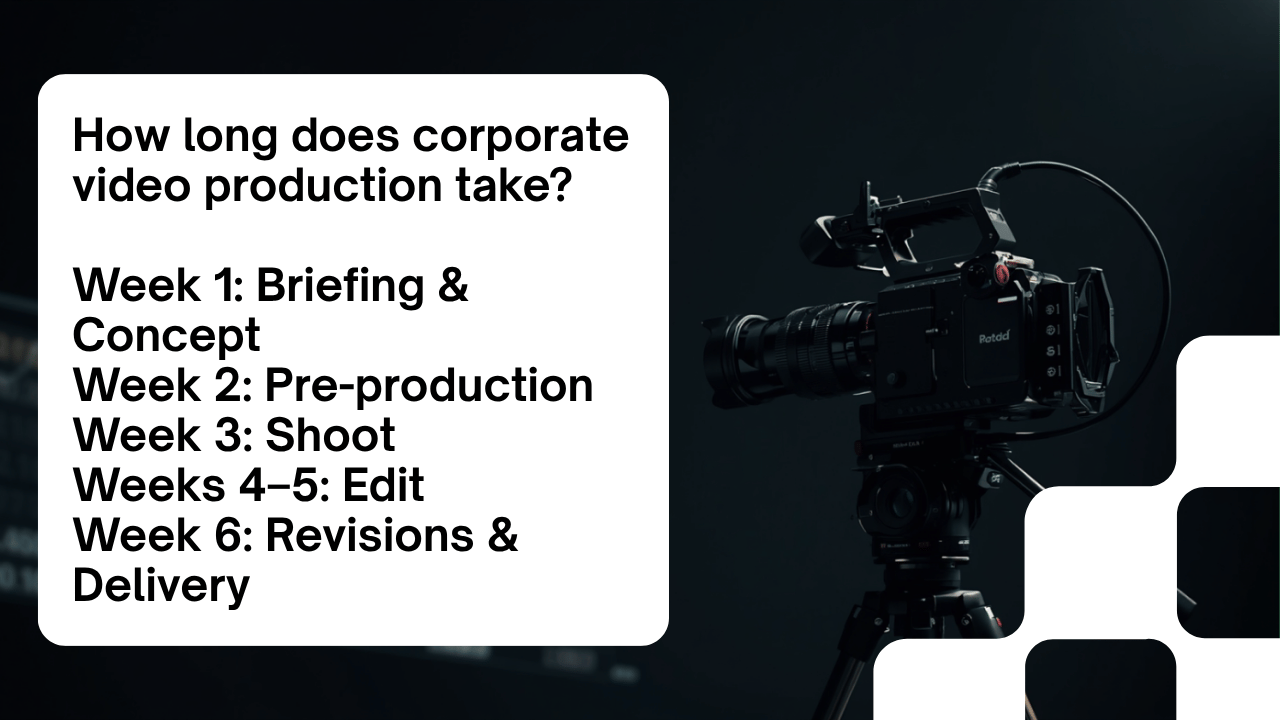
For most companies, video production is about cameras, shoot days and editing. In reality, it's a strategic process that only works when strategy, creativity and execution align. Below is the seven-step system we use at Majortale for every project, from brand films to always-on campaigns.
Strategy and objectives
Before any shot gets planned, you need clarity on why the video exists. What's it supposed to do? Who's it supposed to reach? Where will it appear?
In Belgium, companies often start vague: visibility or branding. Too broad. Strong video strategy translates that into concrete goals — more sales conversations, better job candidates, sharper positioning. We unpack that gap in more detail in Video in 2026: what still works and what you should drop.
This is where we spend real time with clients. We map the current state. Where are potential customers hearing about you now? What's blocking them from moving forward? How does video specifically address that blockage? The answers determine everything.
Concept and preparation
With the goal locked, comes the creative translation. Concept determines how the message gets told — what tone, what form, what story arc. A recruitment video for a public-sector client plays completely differently than a corporate explainer for a Brussels SaaS. Both exist to persuade. The approach is completely different — something we've written about specifically in our piece on employer branding in 2026.
Shooting scripts and shot lists ensure days move fast. In Belgium, where shoots are compact and coordination is real, prep is non-negotiable. We hold a pre-production meeting minimum 10 days before rolling camera. We scout locations. We confirm talent. We test equipment.
The script gets built with deployment in mind. If this is going on LinkedIn, the hook comes in the first three seconds. If it's a sales tool, pacing is different. If it's employer branding, authenticity matters more than polish. These constraints shape the script from the start.
Production
This is the visible part. Cameras, lighting, sound and direction converge. But good production never feels chaotic — everything decided beforehand creates calm on set.
We shoot on Sony FX6, FX3 and RED V-Raptor 8K. Cinema-grade, but still real-feeling. We capture B-roll, talking heads, details, reactions. More material than we need, shot cleanly. You can see the output across our project archive.
We always triple-back-up all footage during shoot. Zero risk of data loss. Memory cards are backed to portable drives. Those drives are backed to cloud. The cost of reshooting in Belgium is staggering — a single lost day on a corporate shoot can wipe €5,000-€15,000 from a budget.
Post and feedback
After shoot wrap comes cutting. Pacing, audio, color and atmosphere shape the message. We do four structured feedback rounds through Frame.io — clean and efficient. Changes get tracked. Decisions are visible. Revisions move fast.
Color grading is where raw footage becomes a story. We don't grade to look pretty. We grade to feel right. A sales video lands differently when it feels bright and energetic. An employer branding piece works better when it feels authentic. Color informs emotion.
Sound design gets the same attention. Not music overlaid on top. Intentional sound architecture. Where is the energy? When does it build? What's the silence doing? These details separate forgettable from memorable video.
Activation and extension
Most companies treat delivery as the finish line. That's a missed opportunity. Real value sits in how content gets used. One shoot produces multiple formats for website, sales, social and recruiting.
A 90-second corporate video becomes a 30-second LinkedIn post, a 15-second Instagram Reel, a 10-second email hero, a 5-minute deep-dive for your sales deck. Not by cropping crudely. By thinking through format requirements upfront.
Thinking that through upfront unlocks more value from the same budget. One production feeds your content calendar for months — which is exactly why working with a video agency versus a one-off freelancer tends to compound over time.
Distribution and measurement
Distribution decides outcomes. The best video disappears if nobody sees it. We create a launch plan with posting schedules, paid amplification if needed, and clear metrics for success.
In Belgium's market, organic reach on social is limited. Paid amplification is usually necessary. We build budgets into recommendations upfront. A €15,000 video with no distribution budget is money wasted.
We track engagement, click-through rates, and downstream results. Did the recruitment video generate applications? Did the sales video move people to conversation? These aren't vanity metrics. They're the reason the video exists. Google's own research on video performance backs this up: campaigns measured against business outcomes outperform campaigns measured against view counts every time.
Iteration and refresh
Video strategy doesn't end at launch. We monitor performance. What's landing? What's not? Sometimes a cut adjustment increases engagement 30%. Sometimes a different headline changes everything.
After three to four months of data, we often refresh and relaunch. Not starting over. Optimizing what's working. A strong video keeps earning for months.